BAD/BSID Dermatology Research Techniques Course York 2026
Date & Time
7–8 September 2026
Venue
Skin Research Centre,
Hull York Medical School,
University of York,
York,
YO10 5DD
Contact
Course Summary
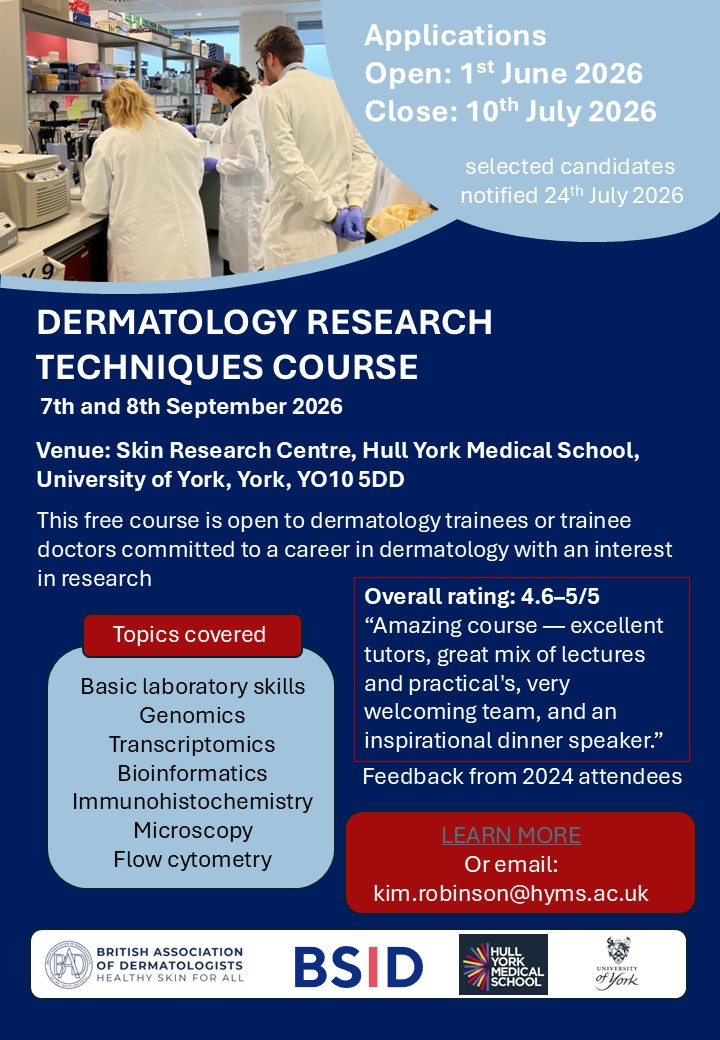
The British Society for Investigative Dermatology (BSID) and the British Association of Dermatologists (BAD) invite applications for the BSID–BAD Dermatology Research Techniques Course 2026, taking place on 7–8 September 2026 at the University of York.
Directed by Dr Kim Robinson with support from Dr Catherine Wright, the course is hosted at the Hull York Medical School’s Skin Research Centre. It is open to dermatology trainees or trainee doctors committed to a career in dermatology who have an interest in research but have not yet undertaken substantial laboratory work. The course also welcomes trainees who may not have access to a local skin research laboratory.
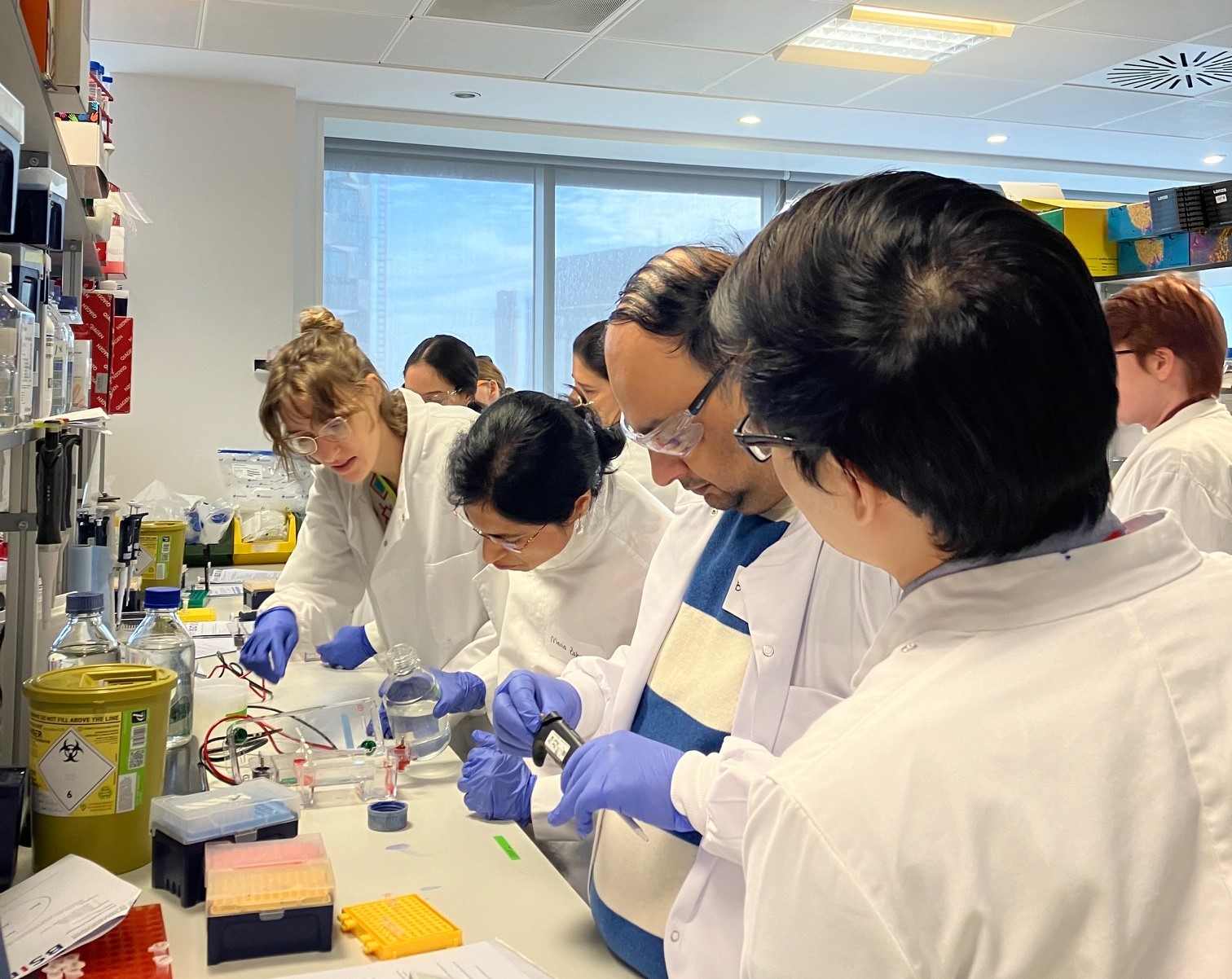
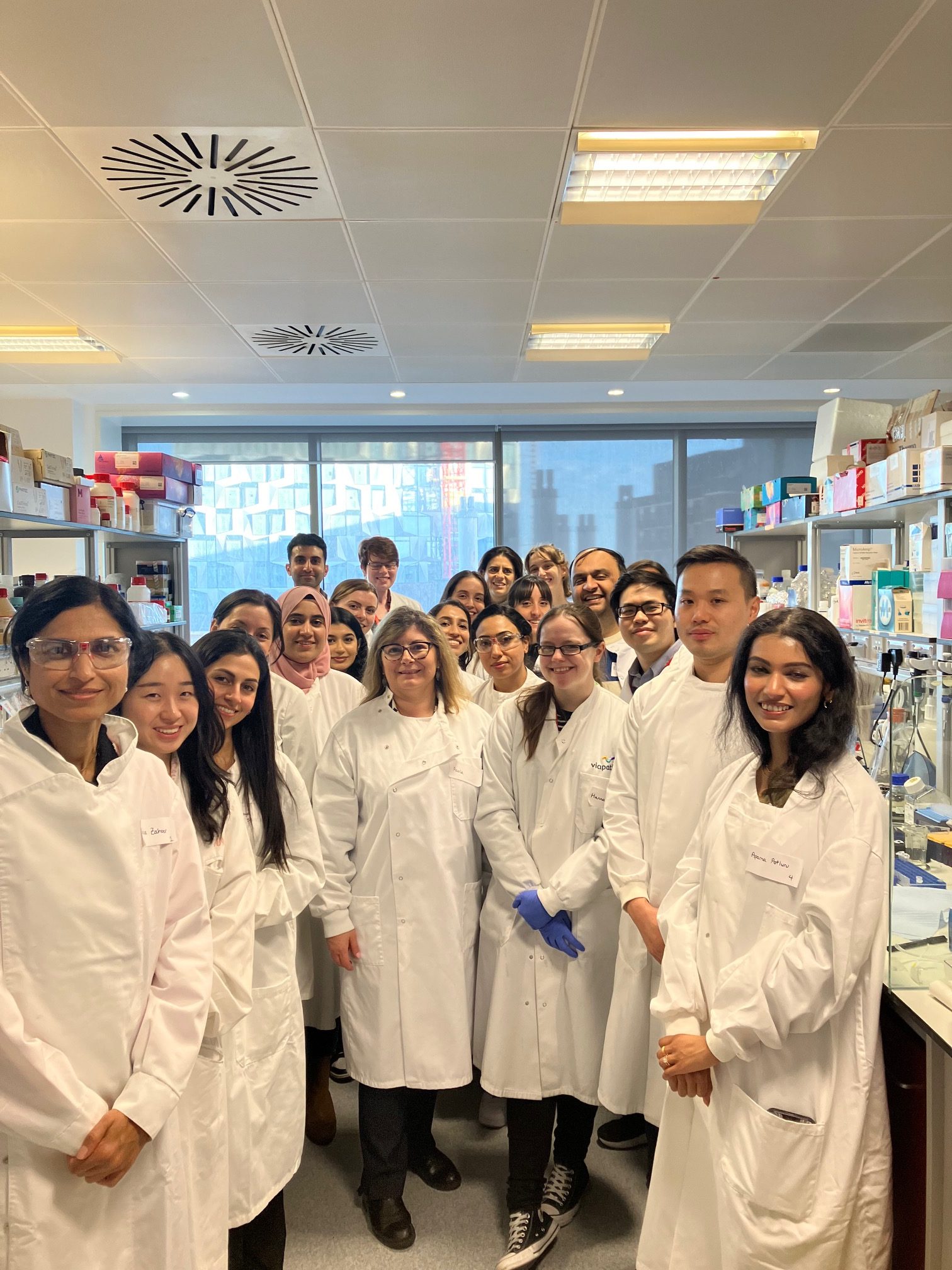
Participants will learn about cutting‑edge technologies used in skin research and gain hands‑on laboratory experience. The programme combines short lectures with supervised practical sessions delivered by academic and research staff.
Topics include: Genomics • Transcriptomics • Bioinformatics • Immunocytochemistry • Flow Cytometry.
The course is free to attend, though participants are expected to cover their own travel and accommodation costs.
Applications open: 1 June 2026
Applications close: 10 July 2026
Notification of selection: 24 July 2026
Applications can be submitted via this registration link